

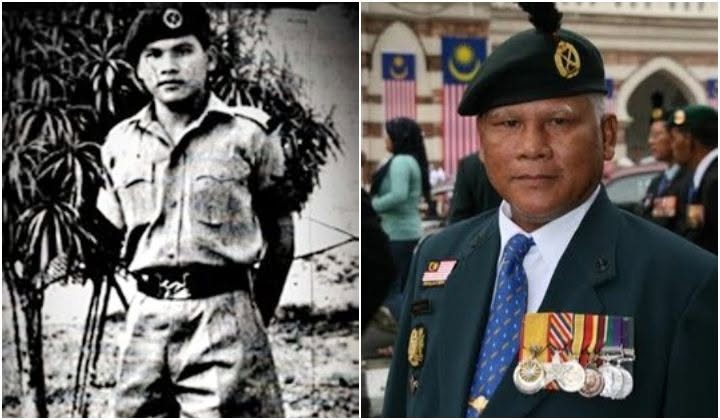
This article was written with the help of AI, based on a post shared by Magic Tawau on Facebook and enriched with public biographical information. Sources are listed at the end.
On 19 February 1980, in the jungle of Tanah Hitam, Perak, a Sarawakian Iban sergeant of the Royal Ranger Regiment tracked a communist terrorist force for eleven days, walked into the middle of it, and took three bullets while leading the assault. Kanang anak Langkau survived. He later became the only person in Malaysian history to hold both the Seri Pahlawan Gagah Perkasa (SP) and the Panglima Gagah Berani (PGB), the country’s highest gallantry awards.
From Iban tracker to Ranger
Kanang was born on 2 March 1945 in Julau, Sarawak. On 21 April 1962 he joined the Sarawak Rangers as an Iban tracker, then part of the British Army, and trained at the Jungle Warfare School in Ulu Tiram. He served during the Brunei Revolt and the Indonesia-Malaysia Confrontation. When Malaysia was formed on 16 September 1963, the Sarawak Rangers became part of the Malaysian Army’s Royal Ranger Regiment. By the late 1970s he was a sergeant with the 8th Battalion Royal Rangers, number 901378.
Iban trackers were prized for reading the jungle: a bent leaf, a disturbed patch of earth or a fresh footprint could tell them how many men had passed and how long ago. That skill defined Kanang’s career.
First award: Korbu, 1979
The 1980 battle was not his first brush with the enemy. On 1 June 1979, in the Korbu Forest Reserve, Sergeant Kanang’s team came upon a resting camp of communist insurgents. Though outnumbered, he led an attack on the camp. Two Rangers were wounded, five insurgents were killed and equipment was seized. For this he received the Panglima Gagah Berani (PGB).
Tanah Hitam, February 1980
On 8 February 1980 a soldier was killed in Tanah Hitam, Perak. Kanang, leading a platoon, was sent to hunt the enemy down. For eleven days they followed the trail. Fresh footprints told them they were close, and the trail eventually led towards an estate at Ladang Kinding, Sungai Siput.
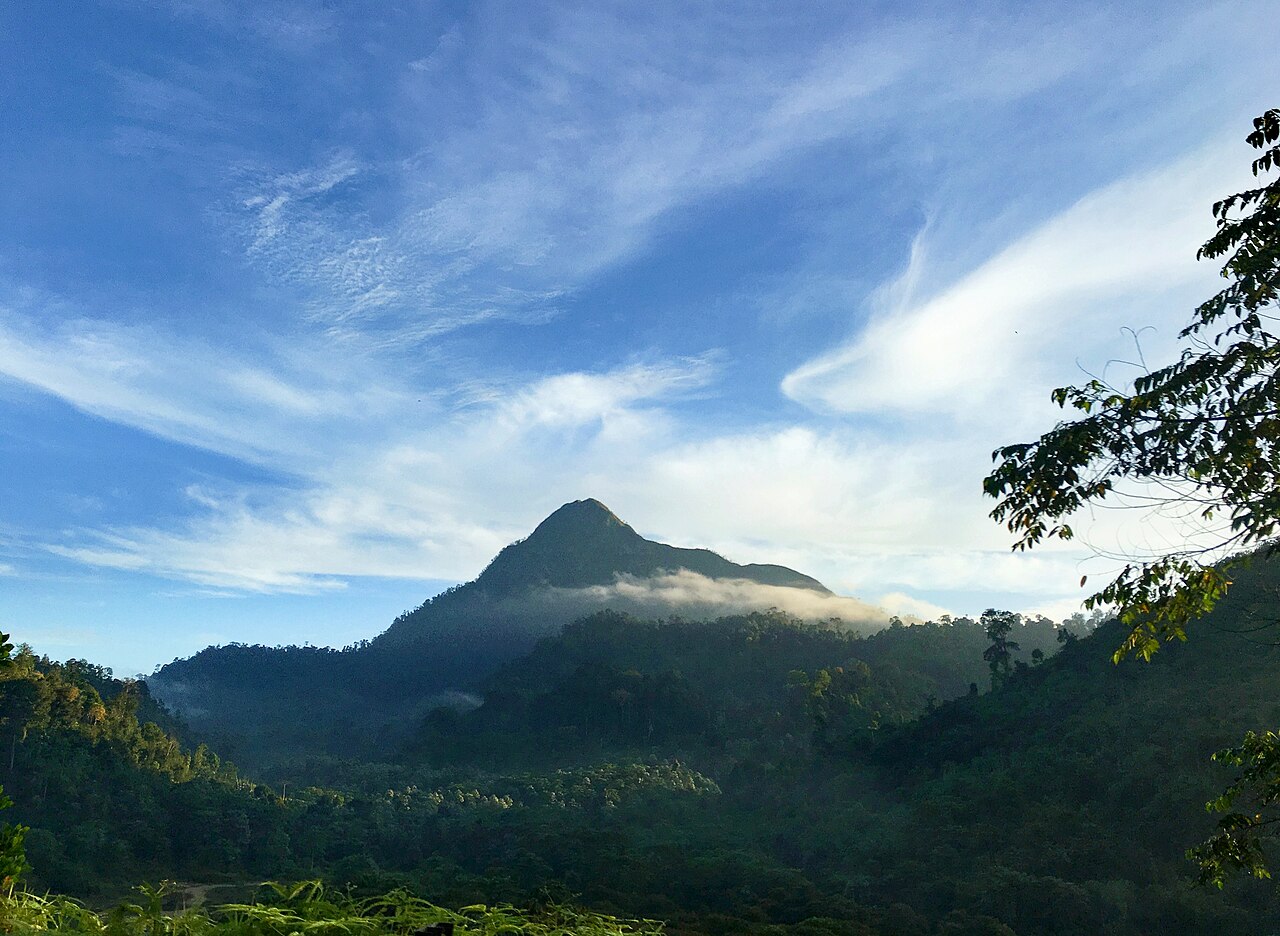
At about 3 pm on 19 February, after a reconnaissance, the platoon estimated that the enemy was nearby. In fact they were already inside the enemy position. Kanang found himself only about eight metres from an enemy sentry. He launched an assault to the right, but then realised the enemy’s main force was on the left, below the slope. Without hesitation he switched the direction of the attack and the platoon drove through the camp.
The enemy turned out to be larger than expected. Heavy fire erupted, and Kanang was hit repeatedly, including in the chest and abdomen. Even badly wounded, he kept giving orders and kept his men fighting. The platoon held its ground and overran the position, although a large part of the enemy force escaped.
Between life and death
Kanang fell into a coma. Accounts differ on how long: the Facebook post says several days, while other sources say two months. Doctors feared he would not survive, but after intensive treatment he recovered and later returned to active duty.
The highest honours
On 3 June 1981, the Yang di-Pertuan Agong, Sultan Ahmad Shah, conferred the Seri Pahlawan Gagah Perkasa (SP) and the Panglima Gagah Berani (PGB) on Kanang. No one else has received both. He retired as a Warrant Officer Class One after more than 21 years of service.
A humble hero
Kanang’s later life was quiet. He lived in Sri Aman, Sarawak, and was named Temenggong, paramount chief of the Iban community there. He was awarded the Officer of the Star of Sarawak (PBS) in 1987. Reports say he once declined the title of Datuk, saying he was a poor man and could not afford it; on 24 September 2011 the Sarawak government conferred the Commander of the Order of the Star of Hornbill Sarawak (PGBK), which carries the title Datuk.
In 2011 he supervised Operation Mai Pulai, which located and exhumed the remains of 21 Iban trackers and Sarawak Rangers who died in the Malayan Emergency, and brought them home to Sarawak for ceremonial reburial in July 2011. In 2009 he also made headlines for helping hand over a baby orangutan from captivity to the Semenggoh Wildlife Centre.
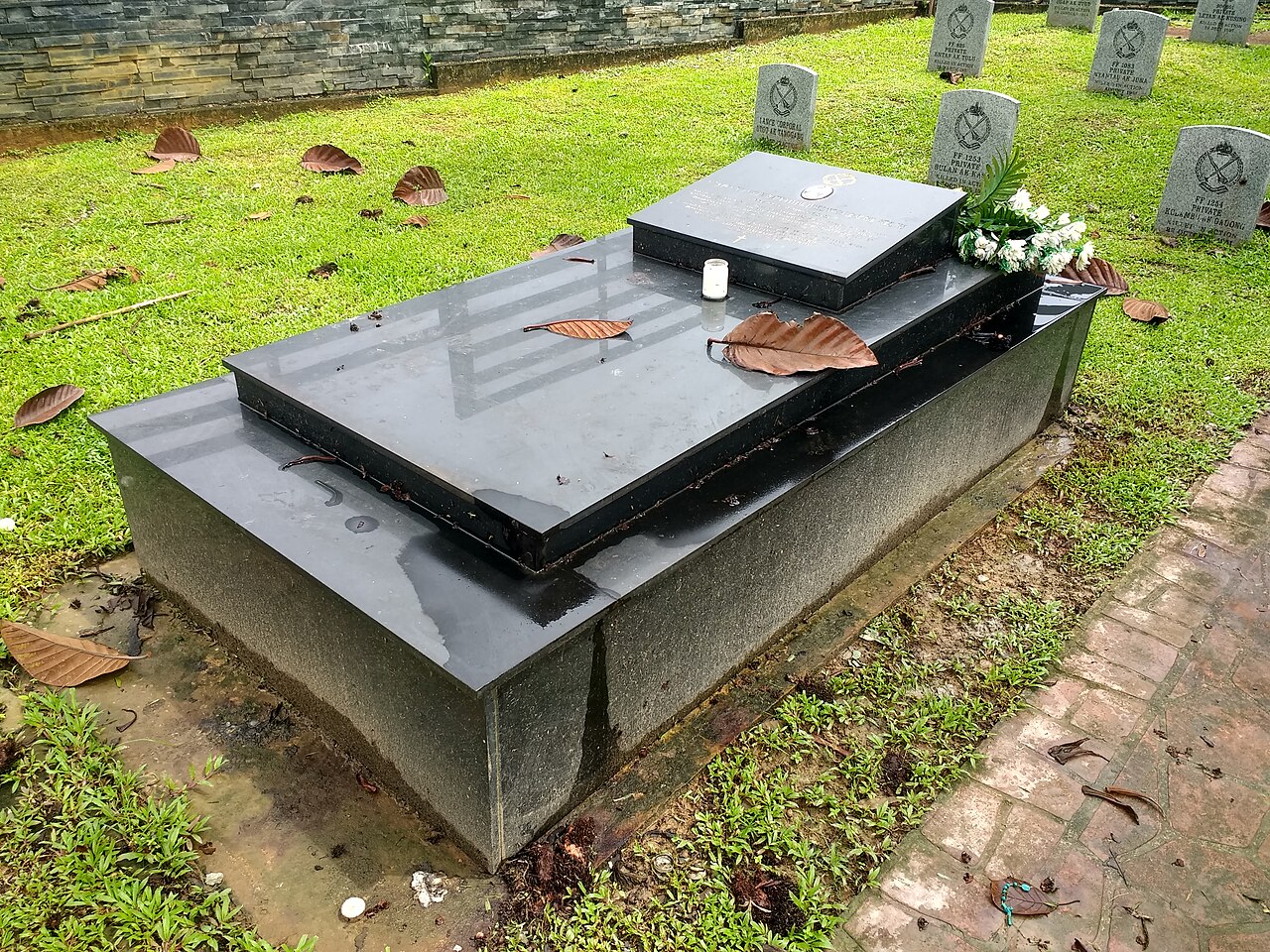
Kanang collapsed at his home in Sri Aman with chest pains and died on 3 January 2013, aged 67. He was given a state funeral and buried with full military honours at the Heroes’ Cemetery in Kuching.
Remembering him
Many Malaysians today have never heard his name. Yet the peace we enjoy was paid for by men like Kanang, who walked into danger because they were the ones who could find the way. His Iban war cry sums it up: “Agi idup, agi ngelaban”, as long as I live, I will fight on.
Sources and credits: Magic Tawau on Facebook; background from Wikipedia: Kanang anak Langkau. Header photo as supplied. Extra photos from Wikimedia Commons: Kuching Heroes Cemetery, Royal Belum State Park; both are illustrations, not photos of the events. Some details differ between sources and may need confirmation from official records.


